Description
This classic puff pastry recipe creates a flaky, buttery dough perfect for both sweet and savory baked dishes. Made with simple ingredients and a straightforward method using a food processor, this pastry dough is chilled and folded to develop multiple layers, resulting in a light and crisp texture after baking.
Ingredients
Scale
Ingredients
- 1 1/4 cups very cold salted butter, cubed
- 1/2 cup very cold water
- 1/4 teaspoon salt
- 2 cups all-purpose flour
Instructions
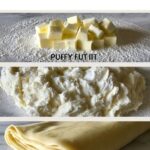
- Combine Flour and Salt: Add the all-purpose flour and salt to a food processor to create the dry base for your dough.
- Add Butter (First Part): Add part of the very cold, cubed butter to the food processor and pulse until the mixture starts to resemble coarse crumbs.
- Add Remaining Butter: Add the remaining butter cubes and pulse a few more times until small pea-sized pieces of butter are evenly distributed throughout the flour.
- Add Cold Water: Pour in the very cold water gradually and pulse until the dough just begins to come together without overmixing.
- Knead Dough: Turn the dough out onto a lightly floured surface and gently knead about 10 times to bring it together, taking care not to overwork it.
- Roll Out Dough: Roll the dough into a 12 by 18 inch rectangle, creating an even thickness to prepare for folding.
- Fold Dough: Fold the rectangle like a letter by folding one third over the center, then fold the dough again into thirds, enhancing the layered structure.
- Chill Dough: Wrap the dough tightly and chill in the refrigerator for 1 to 2 hours to firm up the butter and rest the gluten, essential for flakiness.
- Use the Dough: Remove from the fridge and use your homemade puff pastry in any sweet or savory recipes requiring flaky, layered pastry.
Notes
- Ensure butter and water are very cold to prevent butter from melting before baking, which is key to achieving flaky layers.
- Do not over-pulse the dough in the food processor to avoid developing gluten and tough pastry.
- Gentle kneading keeps the dough tender and prevents the butter from melting into the flour.
- Chilling the dough is important to relax gluten and solidify butter layers for lift and flakiness during baking.
- This dough can be frozen after chilling for up to one month; thaw in the refrigerator before use.