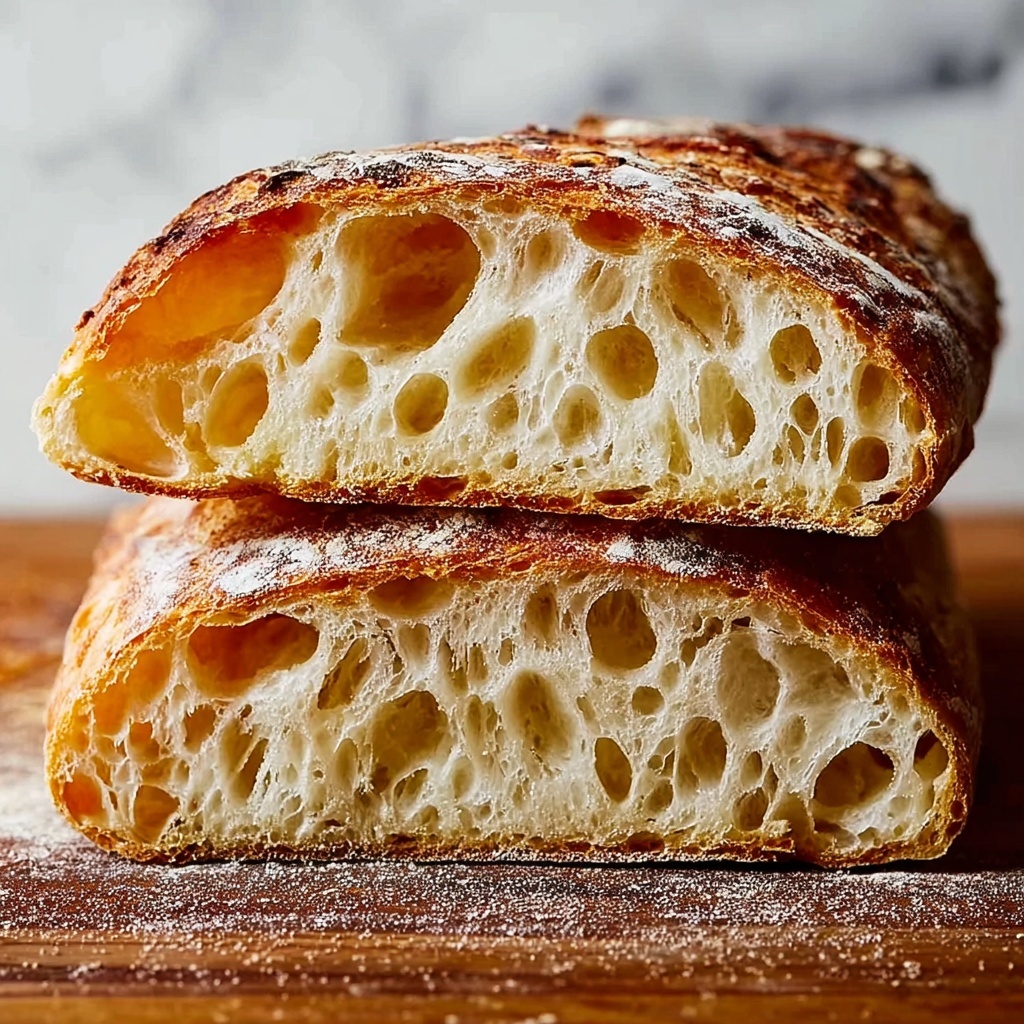
If you have ever dreamed of pulling a warm, crusty loaf of bread fresh from your own oven, then this Homemade Ciabatta Bread Recipe is going to be your new best friend. It’s a beautiful blend of simplicity and artisan flair, delivering a chewy, airy crumb wrapped in a perfectly crisp crust. Every step invites you to slow down and enjoy the magic of bread-making with straightforward ingredients and an approachable technique. Whether you’re a seasoned baker or a passionate beginner, this recipe transforms basic pantry staples into a show-stopping loaf that fills your kitchen with that irresistible, homey aroma.
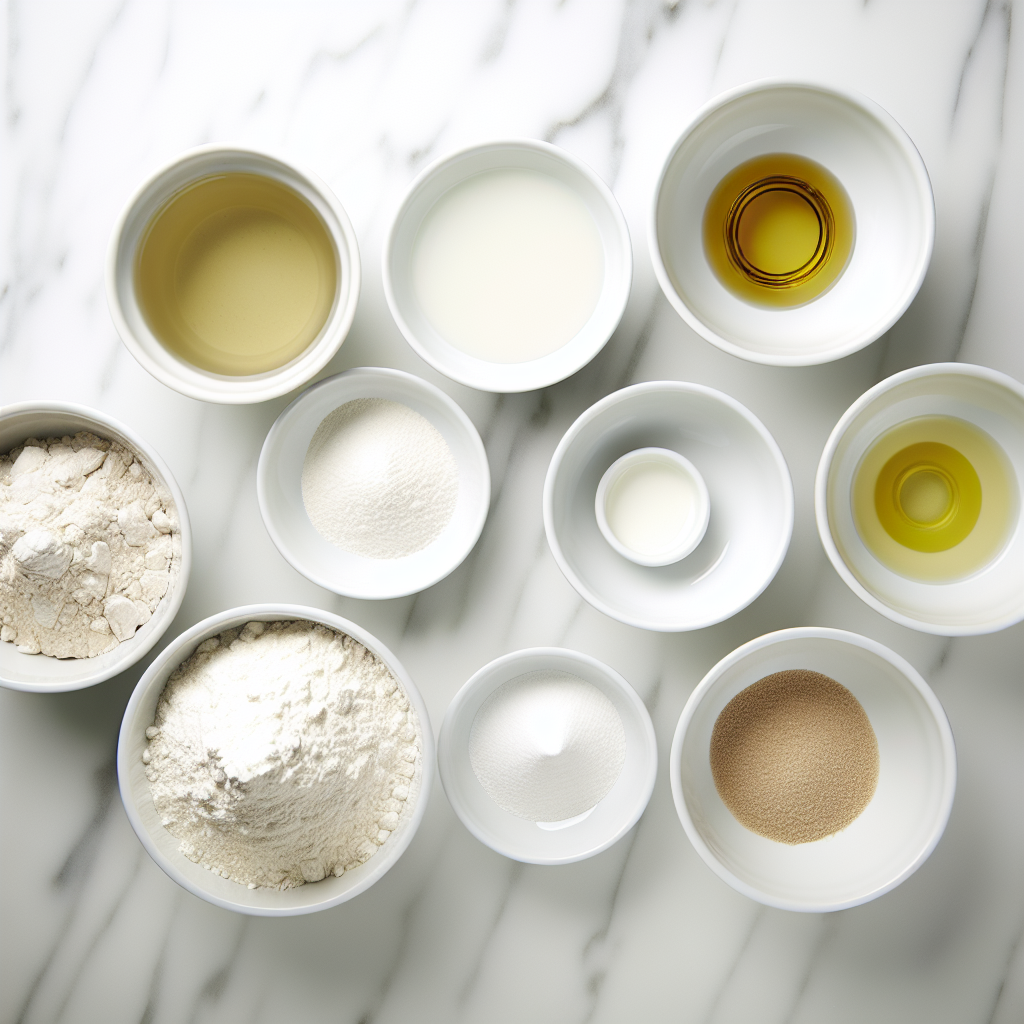
Ingredients You’ll Need
One of the most wonderful aspects of this Homemade Ciabatta Bread Recipe is how it relies on simple, everyday ingredients that come together to create something truly extraordinary. Each component plays a unique role, from the flour’s strength to the delicate balance of yeast and salt, ensuring the perfect rise, texture, and flavor.
- Bread flour (500 g): Provides the essential gluten structure for that classic chewy texture every ciabatta loaf should have.
- Water (400 ml): Hydrates the flour and activates the yeast, creating a sticky, elastic dough that’s key to the bread’s open crumb.
- Active dry yeast or instant yeast (2 tsp): The magical agent that makes the dough rise, giving your bread its airy softness.
- Salt (2 tsp): Enhances the flavor and strengthens the dough, balancing the yeast’s activity.
- Olive oil (1 tbsp): Adds subtle richness and helps create the tender, slightly crisp crust distinctive of ciabatta bread.
How to Make Homemade Ciabatta Bread Recipe
Step 1: Mix the Dough
Start by combining your bread flour, yeast, and salt in a large bowl. Pour in the water and olive oil, then stir until there aren’t any dry flour patches left. The dough will be sticky—that’s exactly what you want, as it’s the high hydration that gives ciabatta its signature open texture.
Step 2: First Rest and Stretch
Let the dough rest for 30 minutes—this pause allows the flour to fully absorb the water. After the rest, perform your first set of stretch and folds: lift one edge of the dough, stretch it upwards gently, then fold it back over the center. Rotate the bowl and repeat this on all four sides. This technique develops the gluten gradually without extensive kneading.
Step 3: Repeat Stretch and Folds
For the best texture, repeat the stretch and fold process two more times, spacing each session about 30 to 45 minutes apart. This slow process builds strength and elasticity in the dough, preparing it for that perfect rise.
Step 4: First Rise
Cover the dough and leave it to rise at room temperature for 1.5 to 2 hours, until it doubles in size. This gives the yeast time to produce those lovely bubbles that result in the famous airy crumb inside the ciabatta.
Step 5: Shaping the Loaves
Generously flour your work surface and gently tip out the dough. It will be delicate and sticky, so handle with care. Using a bench scraper, divide the dough into two or three rectangular pieces. The loose shaping keeps those beautiful air pockets intact.
Step 6: Second Rise
Transfer the shaped loaves to parchment-lined baking trays and cover them. Let the dough rise again for 45 to 60 minutes, allowing it to puff up slightly and develop a light crust on the surface.
Step 7: Prepare the Oven
While your dough is undergoing its second rise, preheat your oven to 450°F (230°C). For an authentic crust, place a tray of hot water on the lower rack to create steam, which helps develop that crisp, crackly exterior.
Step 8: Bake the Bread
Bake the loaves for 20 to 25 minutes until they turn a deep golden brown. A good way to check doneness is to tap the bottom of the loaf—you want a hollow sound that signals a perfectly cooked interior.
Step 9: Cool Before Serving
Remove the bread from the oven and let it cool completely on a wire rack. This resting time lets the crumb set, making slicing easier and ensuring every bite has that perfect texture.
How to Serve Homemade Ciabatta Bread Recipe
Garnishes
Simple touches like a light brush of olive oil and a sprinkle of sea salt right after baking elevate this ciabatta to a flavorful experience. You can also add a bit of fresh rosemary or cracked black pepper for added aroma and complexity.
Side Dishes
Because of its rustic, chewy nature, ciabatta pairs wonderfully with hearty soups, vibrant salads, and robust cheeses. Think rich tomato soup, a crisp Caesar salad, or a platter of Italian cheeses and cured meats to complement the bread’s mild flavor.
Creative Ways to Present
Slice your ciabatta loaf horizontally to create mouthwatering sandwiches or toast it to serve with a flavorful tapenade or olive oil dip. Ciabatta’s open crumb soaks up dressings and sauces beautifully, making it a fantastic bread base for bruschetta or panini.
Make Ahead and Storage
Storing Leftovers
To keep your Homemade Ciabatta Bread Recipe fresh, wrap the cooled loaf loosely in a linen bread bag or paper bag at room temperature. This preserves the crustiness while keeping the crumb soft for up to two days.
Freezing
If you want to store your ciabatta longer, slice the loaf and freeze it in an airtight container or freezer bag. This way, you can conveniently toast individual slices whenever bread cravings hit.
Reheating
To revive the crust and warmth, reheat leftover ciabatta by placing it in a preheated oven at 350°F (175°C) for 5 to 10 minutes. This brings back that fresh-baked texture and aroma effortlessly.
FAQs
Can I use all-purpose flour instead of bread flour?
While all-purpose flour can work, bread flour is preferred because it has a higher protein content that helps develop gluten, resulting in that chewy structure classic to ciabatta. Using all-purpose may give you a softer crumb but less chewiness.
Do I have to use olive oil in the dough?
Olive oil adds flavor and helps with crust tenderness, but if you don’t have it on hand, you can omit it or substitute with a neutral oil like vegetable oil. The bread will still be delicious but with a slightly different texture and taste.
Why is the dough so sticky? Is that normal?
Absolutely! Ciabatta dough is designed to be high hydration, meaning it’s intentionally wet and sticky. Embracing this is key to achieving those gorgeous air pockets inside. Use plenty of flour on your hands and surfaces to manage it.
Can I make this recipe with instant yeast only?
Yes, instant yeast works perfectly and can simplify the mixing process since it doesn’t need to be dissolved first. Just mix it directly with the flour and other dry ingredients as directed.
How important is the steaming in the oven?
Creating steam in the oven helps form a crisp, shiny crust by slowing down the hardening of the surface during the first few minutes of baking. If you don’t have a tray for water, you can mist the oven walls with water or bake in a Dutch oven as an alternative.
Final Thoughts
Baking this Homemade Ciabatta Bread Recipe is a rewarding way to bring a little bakery magic right into your own kitchen. With just a handful of ingredients and some patient steps, you get to enjoy a crusty, airy loaf that’s perfect for so many occasions. I can’t wait for you to try it and experience the joy of fresh, homemade bread in your everyday life.
Print
Homemade Ciabatta Bread Recipe
- Prep Time: 30 minutes
- Cook Time: 25 minutes
- Total Time: 3 hours
- Yield: 2 to 3 loaves
- Category: Bread
- Method: Baking
- Cuisine: Italian
- Diet: Vegetarian
Description
This classic Ciabatta Bread recipe yields a beautifully airy and crusty Italian loaf with a chewy crumb, perfect for sandwiches or as a side to any meal. The dough undergoes a series of stretch and folds to develop gluten structure, resulting in an open crumb. Baking with steam ensures a crisp golden crust.
Ingredients
Ingredients
- 500 g bread flour
- 400 ml water
- 2 tsp active dry yeast or instant yeast
- 2 tsp salt
- 1 tbsp olive oil
Instructions
- Mix Ingredients: In a large bowl, combine the bread flour, yeast, and salt. Add the water and olive oil, mixing thoroughly until there are no dry bits left. The dough will be sticky, so resist the urge to add more flour.
- First Rest and Stretch & Fold: Let the dough rest for 30 minutes. Then perform a stretch and fold by lifting one edge of the dough, stretching it upwards, and folding it over to the middle. Rotate the bowl and repeat this process on all four sides.
- Repeat Stretch & Fold: Perform the stretch and fold process two more times, with 30 to 45 minutes intervals between each to develop the dough’s gluten structure.
- Bulk Fermentation: Cover the dough and allow it to rise at room temperature for 1.5 to 2 hours or until it has doubled in size, indicating proper fermentation.
- Shape the Loaves: Generously flour your work surface and gently tip out the dough. Use a bench scraper to divide the dough into two or three rectangular pieces, handling gently to preserve the air bubbles.
- Final Proof: Transfer the shaped loaves to parchment-lined baking trays. Cover and let them rise for 45 to 60 minutes, allowing for a light final proof before baking.
- Prepare Oven: Preheat your oven to 450°F (230°C). If possible, place a tray of hot water in the oven to create steam, which helps develop the crisp crust of the Ciabatta.
- Bake: Bake the loaves for 20 to 25 minutes, or until they turn golden brown and sound hollow when tapped on the bottom, indicating they are fully baked.
- Cool and Serve: Remove the bread from the oven and let it cool completely on a wire rack before slicing and serving to preserve the texture and flavor.
Notes
- Using bread flour is important for developing gluten and achieving the open crumb.
- The stretch and fold technique replaces traditional kneading and helps build dough strength.
- Adding steam to the oven during baking helps form a crispy crust.
- Ensure the dough is well rested and proofed for the best texture.
- Cool completely before slicing to prevent the crumb from becoming gummy.