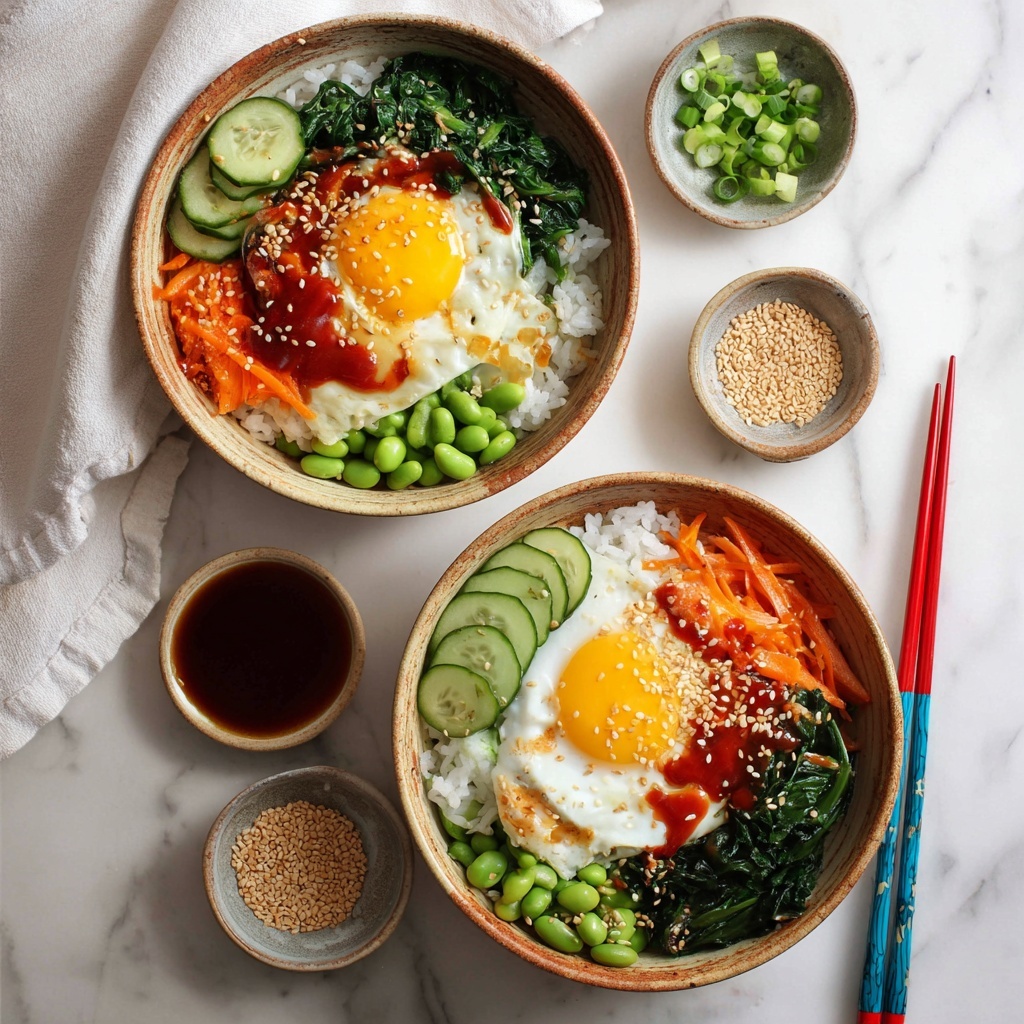
If you’ve ever craved a meal that bursts with vibrant colors, exciting textures, and a harmony of bold flavors, then this Korean Veggie Bibimbap Bowls Recipe is just what you need to try next. It’s a heartwarming mix of tender sautéed veggies, fluffy rice, a perfectly fried egg, and that irresistible kick of gochujang that truly makes every bite unforgettable. Whether you’re new to Korean cuisine or a seasoned fan, this recipe brings a balanced, wholesome meal to your table that feels both comforting and fresh each time you make it.
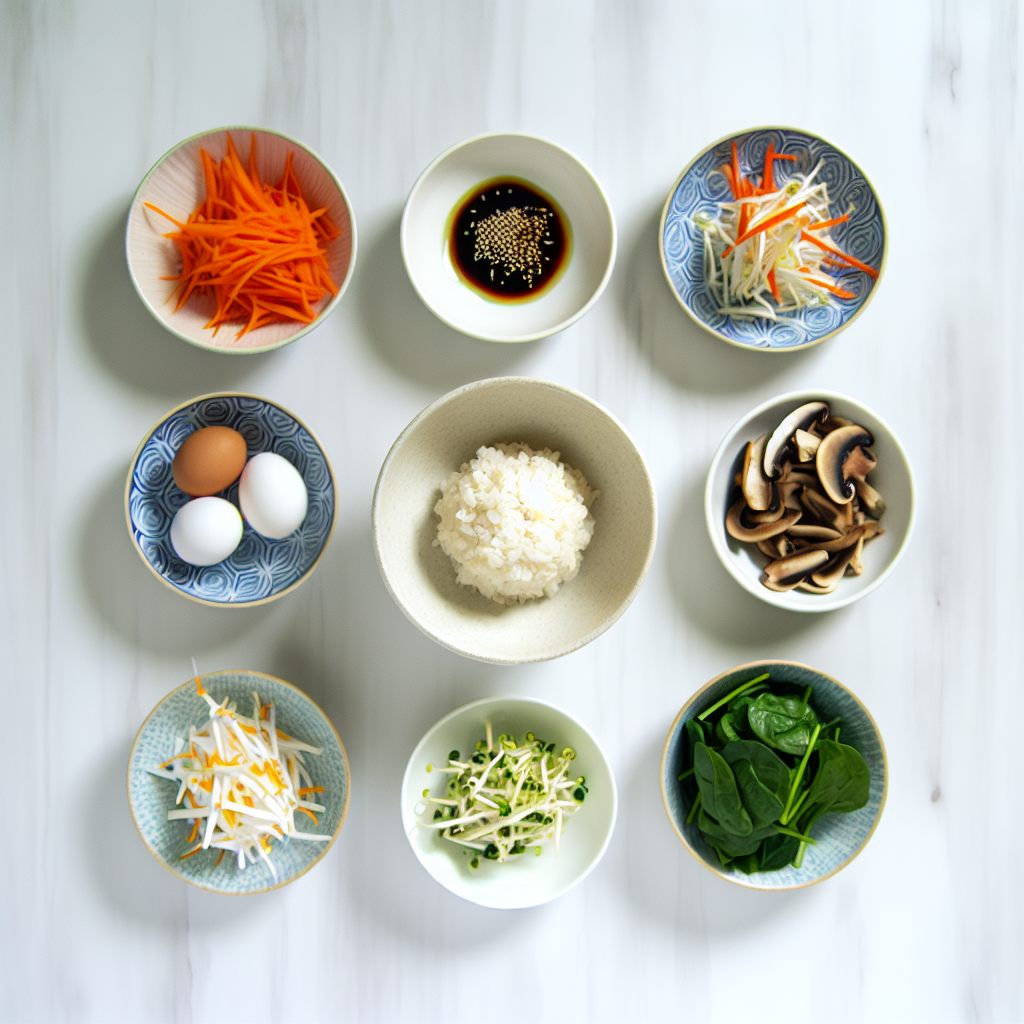
Ingredients You’ll Need
These ingredients are simple yet essential for crafting perfectly balanced Korean Veggie Bibimbap Bowls. Each one brings a unique texture, color, or flavor that combines beautifully in the final dish.
- 2 cups cooked white or brown rice: The foundation that soaks up all the delicious flavors and adds comforting chewiness.
- 1 tablespoon sesame oil: Adds a toasty, nutty aroma that’s signature to Korean cooking.
- 1 cup julienned carrots: Provides a sweet crunch and vibrant orange brightness.
- 1 zucchini, julienned: Offers a mild, tender texture that balances the stronger flavors.
- 1 cup bean sprouts: Brings a fresh, crisp bite and a lovely contrast in texture.
- 1 cup spinach: Adds a leafy, earthy note that rounds out the bowl’s variety.
- 1 cup sliced shiitake or button mushrooms: Deepens the umami profile for extra savoriness.
- 2 teaspoons soy sauce: A salty seasoning that enhances every vegetable’s flavor.
- 1 teaspoon minced garlic: Gives a gentle pungency to lift the sautéed mushrooms.
- 2 eggs: Fried sunny side up to crown the bowl with rich, runny yolks.
- Gochujang (Korean red chili paste), to taste: Adds that spicy-sweet punch that defines bibimbap.
- Sesame seeds and sliced green onions for garnish: Add texture, aroma, and a final pop of freshness.
How to Make Korean Veggie Bibimbap Bowls Recipe
Step 1: Cook and Prepare Your Rice
Start with cooked white or brown rice as your base. Keeping the rice warm is key because it helps blend the flavors once the veggies and egg are added. Rice is like a soft landing pad that soaks up the savory juices and spicy gochujang, making every bite delightful.
Step 2: Sauté the Carrots and Zucchini
Heat the sesame oil in a large skillet over medium heat. Sauté the julienned carrots and zucchini separately for about 2 to 3 minutes each. This step ensures they’re tender yet still have a little bite—retaining their color and fresh taste which keeps the bowl exciting and visually inviting.
Step 3: Cook the Mushrooms with Garlic and Soy Sauce
Add your sliced mushrooms to the skillet along with minced garlic and a splash of soy sauce. Sauté until mushrooms turn soft and fragrant, about 4 to 5 minutes. The combination of umami mushrooms and garlic-soy introduces deep, rich flavors that anchor the lighter vegetables beautifully.
Step 4: Blanch the Spinach and Bean Sprouts
Quickly blanch both the spinach and bean sprouts in boiling water for 1 to 2 minutes each, then rinse under cold water and squeeze out any excess moisture. This treatment keeps them vibrant and slightly crisp. Lightly seasoning with soy sauce is optional but recommended to add an extra layer of taste.
Step 5: Fry the Eggs Sunny Side Up
In a lightly oiled pan, fry the eggs until the whites are fully set but yolks remain runny. That luscious yolk adds creaminess and richness once mixed into the bowl, acting like a natural sauce that brings all the other ingredients together harmoniously.
Step 6: Assemble the Bowls
Divide the warm rice between two bowls. Neatly arrange the prepared vegetables in sections on top of the rice. Place one fried egg right in the center. Drizzle each bowl generously with gochujang for that iconic Korean spice and sweetness, then sprinkle with sesame seeds and green onions for a burst of crunch and freshness.
How to Serve Korean Veggie Bibimbap Bowls Recipe
Garnishes
Sesame seeds and sliced green onions aren’t just for looks—they provide a satisfying crunch and a fragrant punch that elevates every bite. Feel free to sprinkle extra gochujang if you love spicy food or add a drizzle of sesame oil at the end for even more aroma.
Side Dishes
This bibimbap dish goes great with a side of kimchi, which adds tangy, fermented brightness and crunch. You can also pair it with simple pickled vegetables or a light cucumber salad to complement the bowl’s hearty textures.
Creative Ways to Present
Try layering your veggies in a rainbow pattern for a stunning look that’s sure to impress. Using stone or clay bowls keeps everything warm longer and adds an authentic feel. For a family-style meal, place all the ingredients separately on the table and let everyone build their own Korean Veggie Bibimbap Bowls Recipe experience.
Make Ahead and Storage
Storing Leftovers
Store any leftover rice, sautéed veggies, and blanched greens separately in airtight containers in the refrigerator. This helps maintain freshness and texture so you can enjoy them the next day without everything turning soggy.
Freezing
While rice and cooked veggies freeze well individually, it’s best to skip freezing the eggs or blanched greens with moisture. Freeze portions of rice and mushrooms separately for up to 2 months, then thaw gently in the fridge before reheating.
Reheating
Reheat rice and veggies in a skillet or microwave until warmed through. Add a little water or oil if needed to restore moisture. For eggs, it’s best to fry fresh before serving, as reheated eggs tend to lose their texture and flavor.
FAQs
Can I make this Korean Veggie Bibimbap Bowls Recipe vegan?
Absolutely! Simply skip the egg or swap it out for a plant-based alternative like tofu scramble or a vegan egg substitute. The dish remains deliciously satisfying without the egg.
What can I use if I don’t have gochujang?
While gochujang is key to authentic flavor, you can mix a bit of chili paste with miso or a touch of soy sauce and honey to mimic its spicy-sweet profile in a pinch.
Is it okay to use brown rice instead of white rice?
Definitely. Brown rice adds a nuttier flavor and boosts fiber, making your bibimbap even heartier and more nutritious without sacrificing taste.
Can I add protein like tofu or meat?
Yes! Cubed and marinated tofu or thinly sliced beef or chicken stir-fried with Korean seasonings makes a tasty addition to the veggie bibimbap for those wanting extra protein.
How spicy is this dish?
The spice level depends entirely on your gochujang amount. Start with a small drizzle and add more to taste, adapting it perfectly to your heat preference.
Final Thoughts
I can’t recommend this Korean Veggie Bibimbap Bowls Recipe enough if you’re looking for a meal that’s colorful, healthy, and bursting with flavor. It’s one of those recipes that’s easy enough for a weeknight yet feels special anytime. So grab your skillet, cook up those veggies, and enjoy the beautiful mix of textures and tastes that make bibimbap such a beloved classic.
Print
Korean Veggie Bibimbap Bowls Recipe
- Prep Time: 15 minutes
- Cook Time: 15 minutes
- Total Time: 30 minutes
- Yield: 2 bowls
- Category: Main Course
- Method: Stovetop
- Cuisine: Korean
- Diet: Vegetarian
Description
Korean Veggie Bibimbap Bowls are a colorful and nutritious main course featuring a harmonious mix of sautéed and blanched vegetables served over warm white or brown rice. Topped with a perfectly fried sunny side up egg and drizzled with spicy gochujang sauce, this vegetarian dish offers authentic Korean flavors with an easy stovetop cooking method, making it perfect for a healthy and vibrant meal.
Ingredients
Rice and Sauce
- 2 cups cooked white rice (or brown rice)
- 1 tablespoon sesame oil
- Gochujang (Korean red chili paste), to taste
Vegetables
- 1 cup julienned carrots
- 1 zucchini, julienned
- 1 cup bean sprouts
- 1 cup spinach
- 1 cup sliced shiitake or button mushrooms
- 2 teaspoons soy sauce
- 1 teaspoon minced garlic
Egg and Garnish
- 2 eggs
- Sesame seeds, for garnish
- Sliced green onions, for garnish
Instructions
- Prepare the rice: Cook the rice according to package instructions and keep it warm while preparing the vegetables and egg.
- Sauté carrots and zucchini: Heat sesame oil in a large skillet over medium heat. Sauté the julienned carrots separately for 2–3 minutes until just tender, then remove and set aside. Repeat the same process for the zucchini.
- Sauté mushrooms: In the same skillet, add sliced mushrooms along with a splash of soy sauce and the minced garlic. Cook for about 4–5 minutes until mushrooms become soft and fragrant. Remove and set aside.
- Blanch spinach and bean sprouts: Bring a pot of water to boil. Blanch the spinach for 1–2 minutes until wilted, then immediately rinse with cold water to stop cooking; squeeze out excess water. Repeat with bean sprouts. Lightly season both with soy sauce if desired.
- Fry the eggs: Heat a lightly oiled pan over medium heat and fry the eggs sunny side up until the whites are set but the yolks remain runny.
- Assemble the bibimbap bowls: Divide the warm rice evenly between two bowls. Arrange the sautéed carrots, zucchini, mushrooms, blanched spinach, and bean sprouts on top of the rice in sections, creating a colorful presentation.
- Top with egg and garnish: Place a fried egg in the center of each bowl. Drizzle gochujang over the vegetables and rice according to taste. Finish by sprinkling sesame seeds and sliced green onions as garnish.
- Serve and enjoy: Mix all the ingredients together before eating to fully enjoy the layers of flavors.
Notes
- Feel free to customize the bowls with tofu, kimchi, or other favorite vegetables for added flavor and texture.
- For a vegan version, omit the egg or replace it with a plant-based alternative such as tofu scramble.
- You can substitute white rice with brown rice for higher fiber content.
- Adjust the amount of gochujang to control the spiciness level.